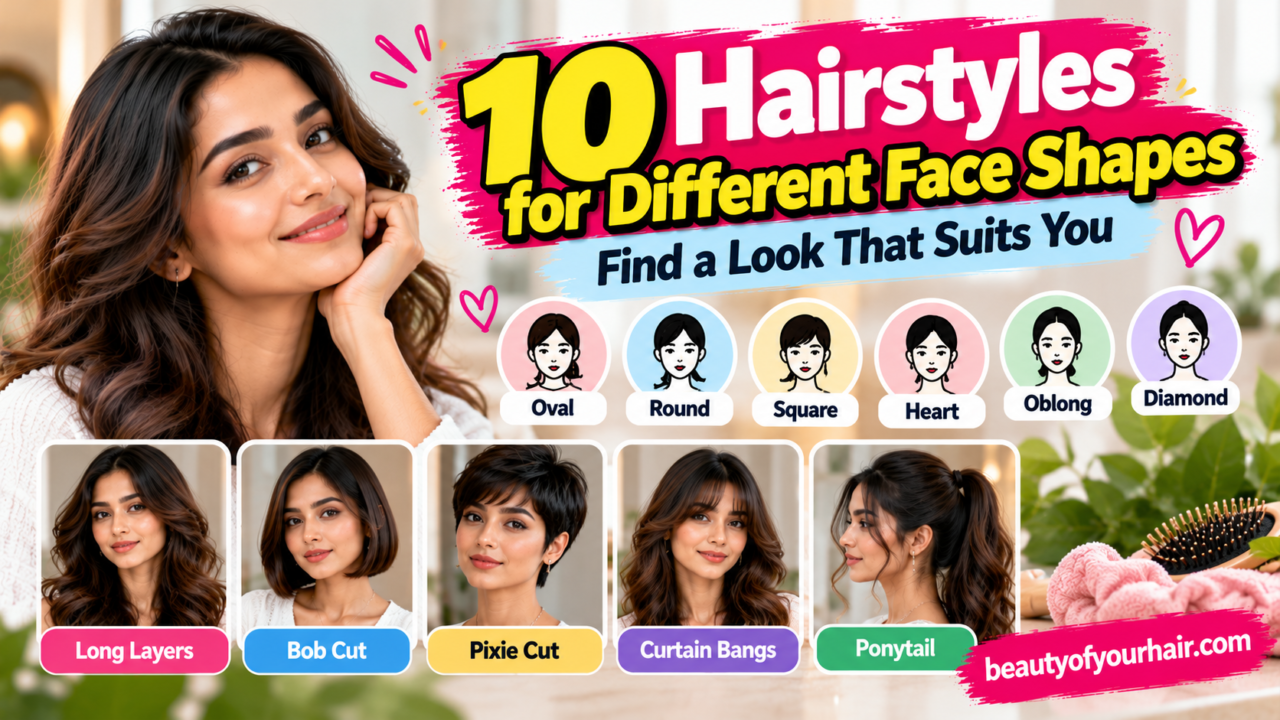
Choosing a hairstyle can feel easier when you understand how different cuts, lengths, and layers change the overall appearance of your hair. However, there is no single hairstyle that everyone with a particular face shape must follow.
Your hair texture, density, maintenance preferences, and personal style are just as important as face shape.
Whether you prefer short hair, long layers, a bob, or a simple everyday hairstyle, this guide explores 10 options to discuss with your hairstylist.
How to Identify Your Face Shape#
Face shapes are useful styling guidelines, not strict categories. Many people have a combination of features rather than one clearly defined shape.
Common descriptions include:
- Oval: The face is generally longer than it is wide, with balanced proportions.
- Round: The face has relatively similar width and length, often with softer contours.
- Square: The forehead, cheekbones, and jaw may appear similar in width, with a more defined jawline.
- Heart-shaped: The forehead may be wider than the jaw, with a narrower chin.
- Oblong: The face appears longer relative to its width.
- Diamond: The cheekbones are often the widest part of the face, with a narrower forehead and jaw.
You do not need to identify your face shape perfectly. Use these descriptions as a starting point when exploring hairstyles.
1. Long Layers for Oval Faces#
Long layers can add movement while preserving the length of your hair.
They work with many face shapes, including oval faces, and can be adapted for straight, wavy, or curly textures.
Styling tip: Ask your stylist to place layers according to your hair density and the amount of movement you want. Layers that are too short or heavily thinned may require more styling.
2. A Soft Bob for Round Faces#
A bob is a versatile haircut that can be customized to different lengths and textures.
A slightly longer bob or a side-parted variation may create an elongated visual effect if that is the look you prefer.
Styling tip: Discuss where the haircut should end in relation to your jawline and how much daily styling it will require.
A round face does not mean you need to avoid short hair. Personal preference and overall proportions matter more than rigid rules.
3. A Textured Pixie Cut for Square Faces#
A pixie cut can provide a low-length, modern hairstyle with plenty of styling possibilities.
Soft texture, a side-swept fringe, or a slightly longer top can create a different appearance from a very short, sharply defined cut.
Styling tip: Consider your natural hair growth pattern and whether you are comfortable with regular trims.
4. Curtain Bangs for Heart-Shaped Faces#
Curtain bangs part near the middle and sweep toward the sides.
They can frame the forehead and blend into longer layers, making them a versatile option for people who enjoy face-framing styles.
Styling tip: Ask for a length that works with your hair texture and styling routine. Bangs may require regular trimming and some daily maintenance.
5. A Shoulder-Length Lob for Oblong Faces#
A long bob, often called a lob, falls around the shoulders or nearby.
It can be worn straight, wavy, or curly and offers a practical middle ground between short and long hair.
Styling tip: If you want additional width or volume, discuss soft waves or layers with your stylist. The best length depends on your hair texture and preferences.
6. A Side-Swept Hairstyle for Diamond Faces#
Side-swept styling can create movement and draw attention to different parts of the face.
This approach works with many lengths, from short layered cuts to long hair.
Styling tip: Experiment with a side part or a side-swept fringe before making a major haircut change. A small styling adjustment can help you decide whether you like the effect.
7. A Classic Blunt Bob#
A blunt bob features a relatively even perimeter rather than heavily layered ends.
It can look particularly striking on straight or fine hair, although the result depends on hair density, texture, and the specific cut.
Styling tip: Ask whether the shape will maintain its appearance with your natural texture. Some versions need frequent styling to preserve a very smooth finish.
8. Soft Waves for a Relaxed, Versatile Look#
Soft waves add movement and texture without requiring a major haircut.
They can work with short, medium, or long hair and can be created with suitable heat-styling tools, braids, or other techniques.
Styling tip: If you use a curling iron or straightener, choose an appropriate heat setting and use a heat protectant. Avoid excessive heat to reduce damage.
9. A High Ponytail for Everyday Convenience#
A high ponytail is a practical option for exercise, warm weather, and busy days.
You can keep it simple or wrap a small section of hair around the hair tie for a more polished finish.
Styling tip: Avoid pulling the hair too tightly, particularly around the hairline. Repeated tight hairstyles can contribute to traction-related hair loss.
10. A Long, Face-Framing Fringe#
A longer fringe that blends into the sides can provide a subtle change without removing much length.
It can be adapted to many face shapes and works with different hair lengths.
Styling tip: Ask your stylist to show you how the fringe will sit when your hair is worn naturally. Consider whether you are comfortable styling it after washing.
How to Choose the Right Hairstyle for Your Hair Type#
Face shape is only one consideration when choosing a haircut.
Straight Hair#
Straight hair can show the outline of a cut clearly. Blunt bobs, long layers, and curtain bangs may all be options depending on density and the desired shape.
Wavy Hair#
Wavy hair can provide natural movement. Layer placement is important because excessive layering may create more volume than you want.
Curly Hair#
Curly hair often behaves differently when dry than when wet. Discuss shrinkage, curl pattern, and the finished length with a stylist experienced in cutting curls.
Fine Hair#
A suitable cut can help fine hair appear fuller, depending on its length and shape. Avoid assuming that every person with fine hair needs the same haircut.
Thick Hair#
Layers can help manage bulk in some hairstyles, but the right approach depends on your texture and preferred silhouette.
What to Tell Your Hairstylist Before a Haircut#
A good consultation can help you avoid a cut that is difficult to maintain.
Before your appointment:
- Save two or three hairstyle references you genuinely like.
- Explain how much time you spend styling your hair each day.
- Discuss your natural texture and hair density.
- Mention any difficulties you have with your current haircut.
- Ask how the proposed cut will look as it grows out.
- Confirm the maintenance and trimming schedule.
Remember that a reference photo is a guide rather than a guarantee. Hair texture, density, and styling techniques influence the final result.
Frequently Asked Questions#
Which hairstyle suits all face shapes?#
No single hairstyle suits everyone in exactly the same way. Long layers, shoulder-length cuts, and adjustable fringe styles can be customized for different face shapes and hair textures.
Does short hair suit a round face?#
Yes. Short hair can suit a round face. The ideal length and shape depend on personal preference, hair texture, and the appearance you want to create.
Are layers good for every hair type?#
Layers can work with many hair types, but their placement and length matter. A stylist can help determine whether layers will provide the movement, volume, or shape you want.
How often should I trim my hair?#
The timing depends on your haircut, hair growth, and personal preference. Short or sharply defined cuts may need more frequent trims than longer styles.
Can I choose a hairstyle without knowing my face shape?#
Absolutely. Start with the hairstyles you like, consider your natural hair texture, and discuss practical maintenance with your stylist.
Conclusion#
Finding a hairstyle you love is about more than matching a face-shape category. The right cut should work with your natural hair, fit your lifestyle, and make you feel comfortable.
Use these 10 hairstyles as inspiration, collect reference photos, and discuss your preferences with a qualified hairstylist before making a significant change.